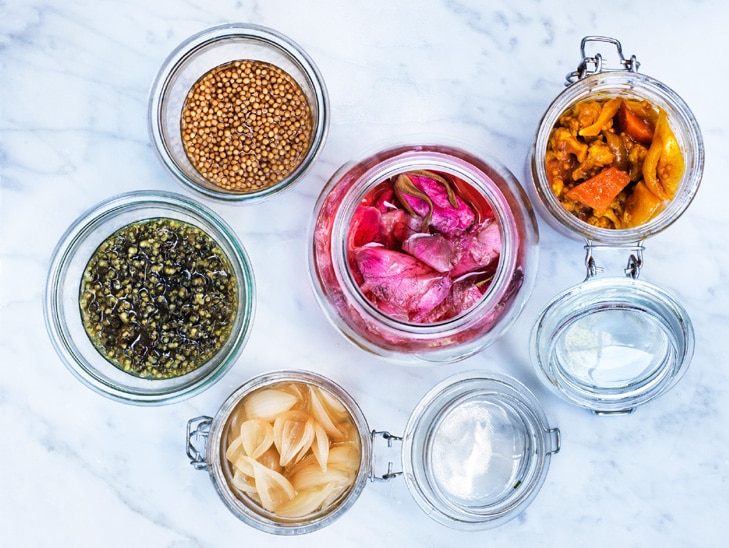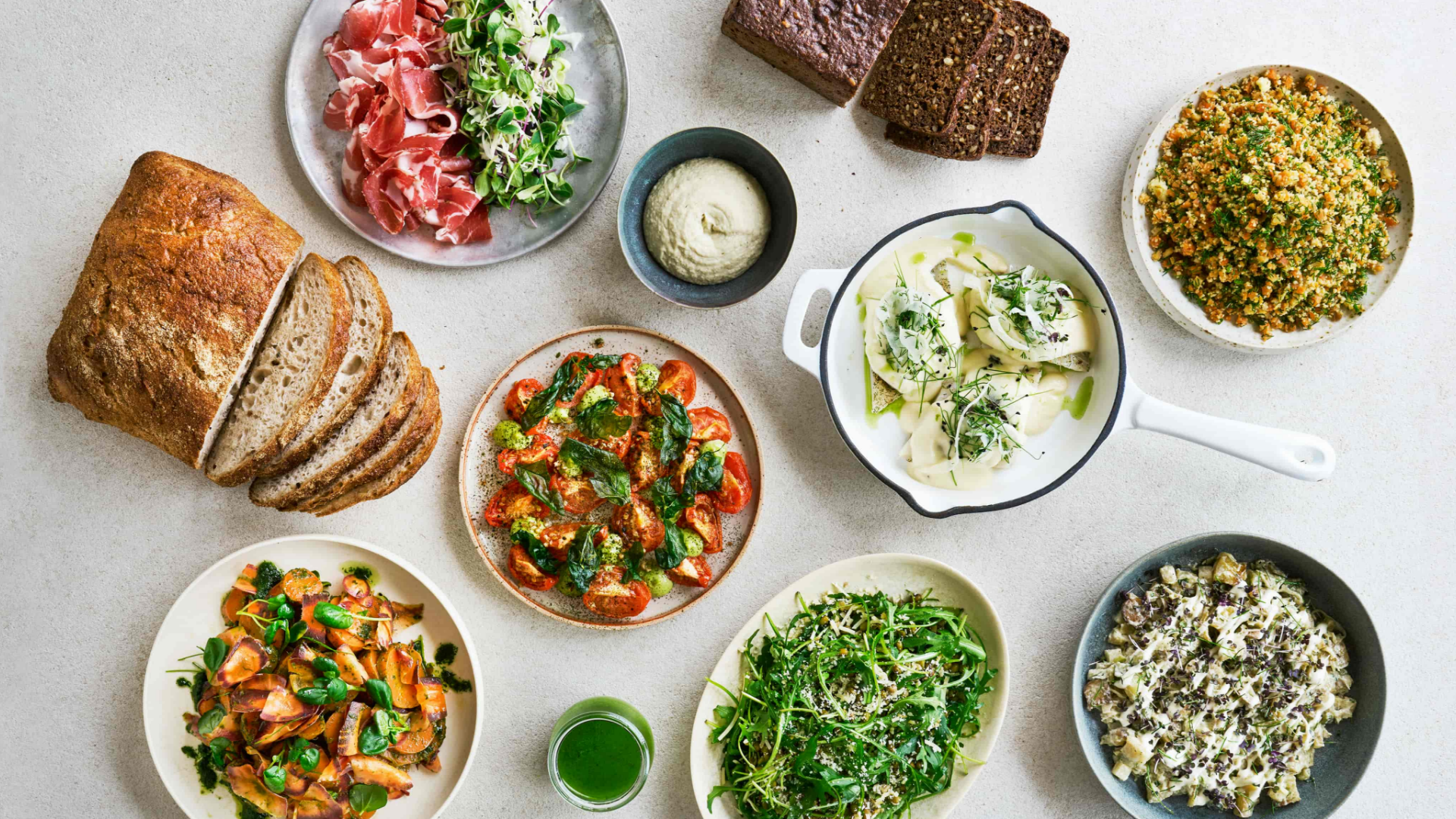
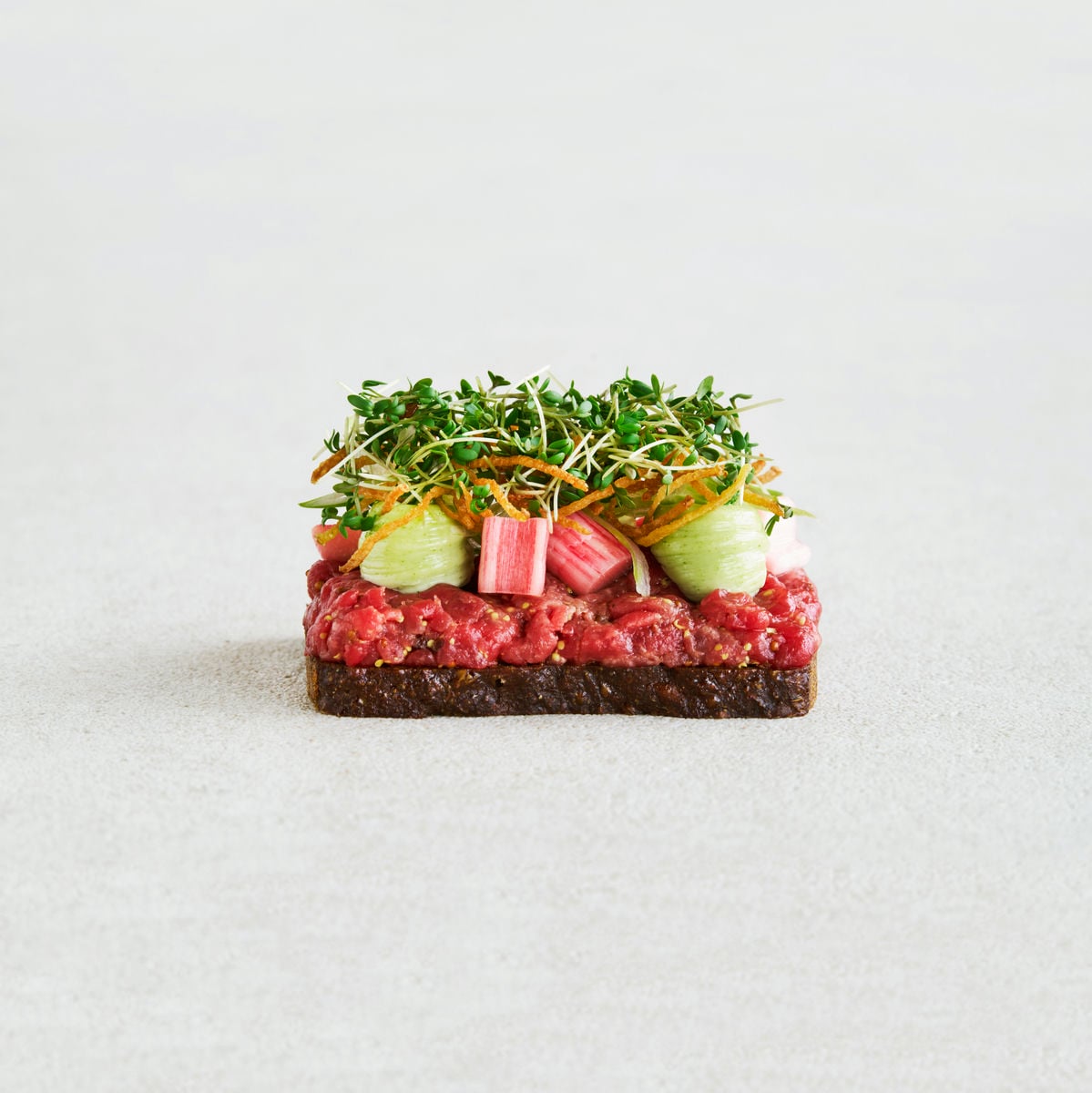
Serve your pickles with: remoulade, braised and roasted meat, rolled sausage, steak tartare, steak frites and sausages.
Ingredients
See video guides here
Instructions
Divide the cauliflower into small florets, then dice the stalk and vegetables into cubes of approx. 1 x 1 cm. Toss them with salt in a large bowl and leave to stand for a couple of hours, or preferably overnight. Rinse the salted vegetable cubes thoroughly and drain them in a sieve.
Place all the ingredients for the pickling liquid in a large saucepan that can also hold the vegetables and bring to the boil. Add the vegetables to the boiling pickling liquid and cook for 20 minutes until they are tender but still have a bit of bite, then strain the vegetables and reduce the pickling liquid until approx. 400 ml remains. Mix the cornflour with the water, stir the mixture into the pickling liquid and bring to the boil.
Return the vegetables to the saucepan, give them a stir and bring to the boil again. Add Atamon if you wish, if you want your pickles to keep for several months. Transfer the pickles to sterilised jars. Close the lids, leave them to cool and store the jars in the fridge.
Will keep for approx. 1 month without Atamon and at least 6 months with Atamon.
Sterilise the jars, lids and bottles, then pour in a generous amount of Atamon and shake well so that the Atamon coats all surfaces. Then pour the Atamon into the next jar or bottle. Not all recipes specify that you should add Atamon, but you should do so if you want to keep the preserves for several months. Once you’ve opened the jar, the shelf life drops drastically. An opened jar will keep for about 2–4 weeks, depending on the sugar content and how you handle it. Only use clean utensils when taking something out – don’t use the same knife you just used to spread liver pâté on your bread. If you have plenty of time, you can also avoid Atamon altogether and use the preserving method. The advantage of this method is that you don’t need to keep the jars in the fridge afterwards either. They can simply be stored on a shelf in a cool kitchen cupboard or larder, if you’re lucky enough to have one!