Ingredients
See video guides here
Instructions
Place all the ingredients for the syrup – except the onion – in a saucepan. Stir until the sugar has dissolved, then bring the mixture to the boil. Leave the syrup to simmer for 10 minutes to allow the flavours to develop and come through. Add the onion during the last 3 minutes of cooking so that it has time to soften without losing its crunch. Remove the saucepan from the heat and allow the syrup to cool completely before using.
Start by removing the backbone from the herring fillets by cutting or trimming it off. Then place the fillets on a chopping board, flesh-side up, so they are ready for the filling. Finely chop the capers and mix them together with the chopped dill and coarse Dijon mustard in a bowl. Spread approx. 1.5 teaspoons of the mustard mixture evenly over each fillet. Season with a little salt and freshly ground pepper to bring out the flavour.
Gently fold each fillet over so that the filling is enclosed. Then gently coat them in rye flour so that they have a light and even coating. Heat a frying pan with a good dash of oil and fry the fillets on both sides until they are cooked through and have a light golden surface. Repeat the process until all the fillets are cooked. Leave them to cool completely before further processing.
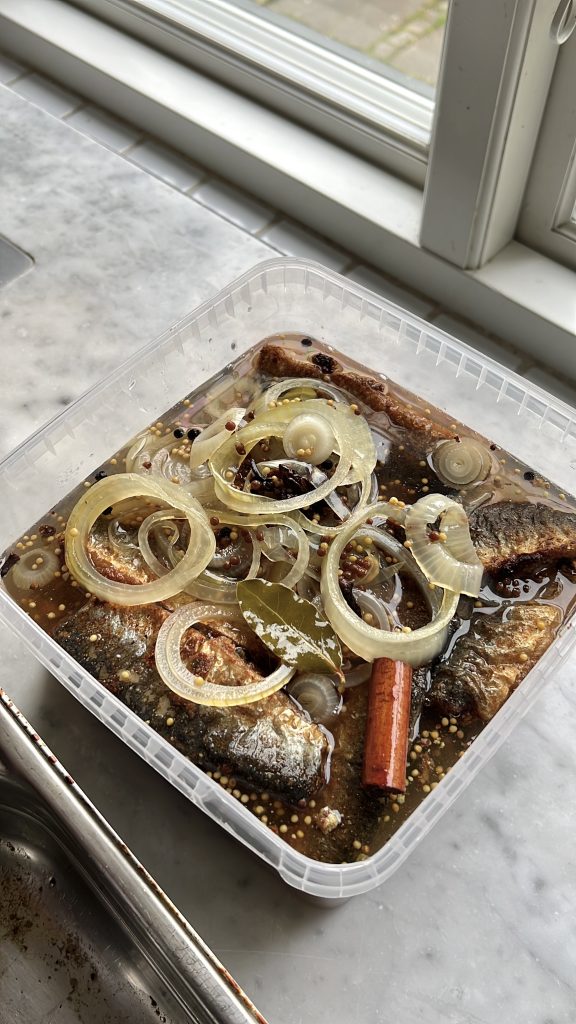
Once the fillets have cooled, place them carefully in a container, preferably a plastic one that is easy to seal. Pour the cooled brine over the herring fillets so that they are completely covered. Place a small plate or a lid on top to ensure that the herrings remain submerged in the brine.
The herrings are ready to eat after just 24 hours, but the flavour develops best after 3 days in the brine. They can be stored in the fridge for at least 2–3 weeks and are perfect as part of a classic lunch spread.