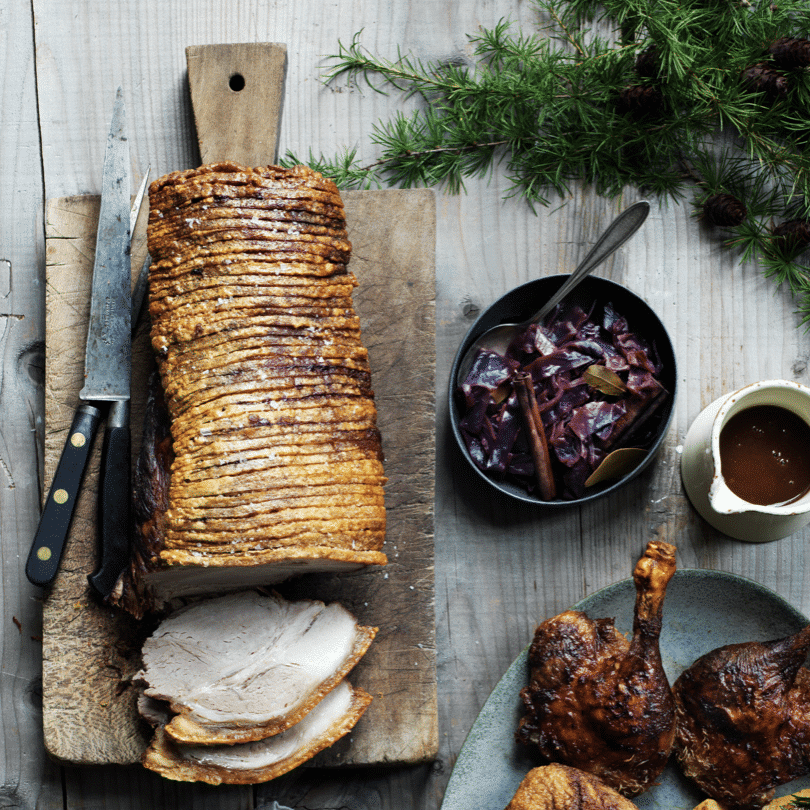
Cooking times vary slightly depending on whether you’re using a neck roast or a loin roast – here are some tips for both.
Ingredients
See video guides here
Instructions
Preparation: Preheat the oven to 180 degrees. Score the rind with a knife down into the layer of fat, taking care not to cut into the meat, or ask the butcher to do this for you. However, always check afterwards to ensure that the score extends right to the edge.
Sprinkle the whole joint generously with salt (don’t be shy here), and rub it well into the rind and the underside of the joint.
Place the joint in a roasting tin with the rind facing downwards.
Place the joint in the hot oven and pour the water into the roasting tin. Cook the joint for 30 minutes at 180 degrees.
Remove the roast, but leave the roasting tin with water in the oven. Turn the roast over and place it on a rack. The rind should lie flat, so if the roast is lopsided or shorter on one side, place a small potato or a roll of silver foil under the roast to make it stand level. Now place bay leaves between every second or third piece of rind, and add cloves if desired.
Return the roast to the oven on the rack positioned above the roasting tin. The rind should be facing upwards. If desired, pour 1 litre of extra water into the roasting tin along with some chopped soup vegetables such as onions, thyme and root vegetables, if you wish to give your stock a little extra flavour. Roast for one hour and 45 minutes if it is a neck roast, or one hour and 15 minutes if it is a loin roast. Make sure the roasting tin does not boil dry during cooking.
When there are ten minutes left of the cooking time, pour the stock from the roasting tin into a bowl. Set this aside for the gravy. Turn the heat up to 200 degrees and keep a close eye on the roast for the remainder of the cooking time. The core temperature should be 65 degrees if you’re using a meat thermometer.
Tip: If the crackling doesn’t seem quite crispy, switch on the grill for the final few minutes. But do this with the oven door open and keep a close watch. Within seconds, the crackling will go from golden brown to black! The bay leaves will be completely charred during this process, but simply remove them before carving the roast.
Let the roast rest for 15–20 minutes before carving.